For teams

Keep what you build tied to who it’s for

Your team ships more in a week than anyone can read. Someone asks “does it do that, and who’s it for?”, and the honest answer is “let me check”.

Tell us what you’re building/contact/How we work with a team/how-we-work/

The slowness was doing useful work

What changed

A feature used to take a fortnight, and everyone could follow it

It came up at stand-up while it was being made, someone pushed back in review, and by the time it shipped you could all say who it was for. None of that was on anyone’s plan. It happened because the work was slow enough to talk about.

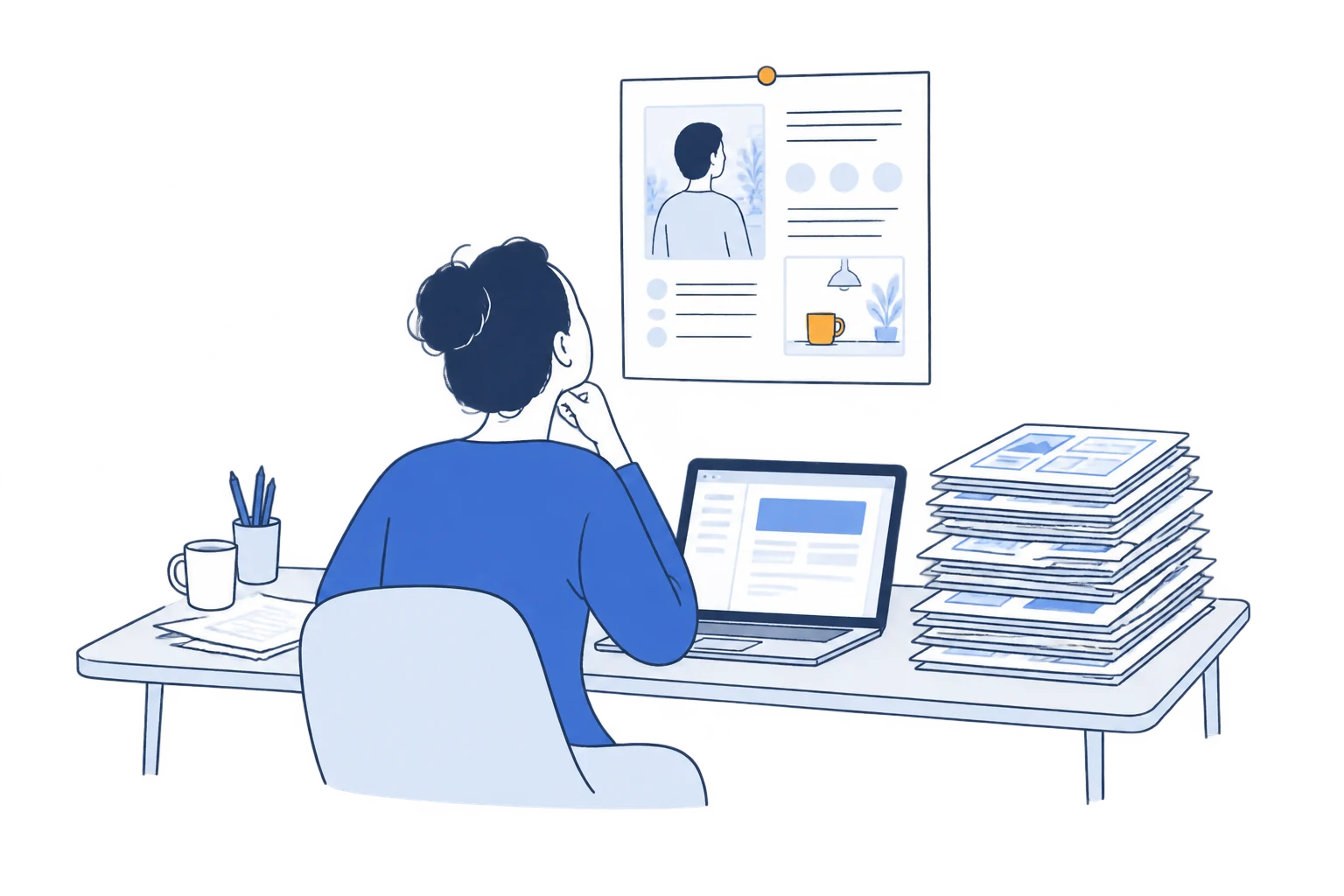
A team lead at a desk as finished screens pile up fast beside the laptop, looking up at one persona sheet pinned above the desk.

Eleven minutes, forty files

On Monday you asked for a way to pause a subscription. On Tuesday, a little after two, it was there: the button, the email, the screen in settings, forty files changed and every one of them reasonable. It took the coding agent eleven minutes. It’ll take you most of an afternoon to find out what it decided along the way, and whether the customer who asked for it would recognise it.

That isn’t a reason to slow the agent down. The speed is real, and you’d be foolish to hand it back. It’s a reason to keep on purpose what the slow way gave you for free: who each piece is for, what they need it to do, and whether anyone has shown that it does.

The work sped up. The answers didn’t.

What you hear today

  • “I think it does. Let me check with someone.”
  • “It looked fine in review.”
  • “That was decided before my time.”
  • “The deck’s from last week, but it’s roughly right.”

What you could hear instead

  • “It does, and it’s for the night-shift nurse.”
  • “It’s been shown to work for these cases, not yet for that one.”
  • “We decided that in March, and here’s why.”
  • “This is where it stands this morning.”

What gets built starts from a role, and what you learn goes back to it

Building is the step a coding agent has made fast, so the steps on either side of it are the ones to keep hold of.

Who it’s for

  1. PersonasThe roles your product serves
  2. AbilitiesWhat each role needs to do, with its checks
  3. Where it happensIts place in the product
  4. Built and checkedBy your team, or a coding agent
  5. What users sayBack to the persona it concerns

As the source reports it.Worked out from the source’s figures.Drawn to show the pattern, not measured.

Every piece starts from someone

Each persona carries a short list of what that role needs to be able to do, and each of those has its place in the product and the checks that say it works. Your team builds from that list, and so does your coding agent, so new work arrives already saying who it’s for and which check it answers. Anyone can read it without opening the code.

When a customer tells you something that doesn’t fit, it goes back to the persona it concerns, not into a backlog nobody reads. The next piece of work starts from what you learned. It’s how we build with the teams we work with, and you can have it two ways.
Two ways to have it

Pro, on your own

  • The whole workbench, paid once for $379, for up to 5 of you.
  • Your strategy, your website, every persona you need, and help writing all of it.
  • Everything you wrote in the free creator is already there.

Build, with us

  • Your personas and what each needs, inside your codebase.
  • Your coding agents build from them and report back to them.
  • We set it up alongside your team, as Opable, and price it for your team.

How Build begins

  1. Tell us what you’re building

    A few lines: what it is, who you think it’s for, and what you can no longer see.

  2. We look at it together

    We talk about your product, and show you how the work would go.

  3. Your personas come with you

    Whatever you’ve written already comes across as it is, so we start from what you know.

Tell us what you’re building

One of us reads it and writes back.

Tell us what you’re building/contact/Or start free, with one persona/persona-creator/