Free persona creator

Create user personas your team will actually use

Ask three people on your team who the customer is and you’ll hear about three different people. Write down the one you’re all building for, and take it into the next meeting.

Create a persona/persona-creator/See researched examples/personas/examples/

You can start right now, in your browser, without an account.

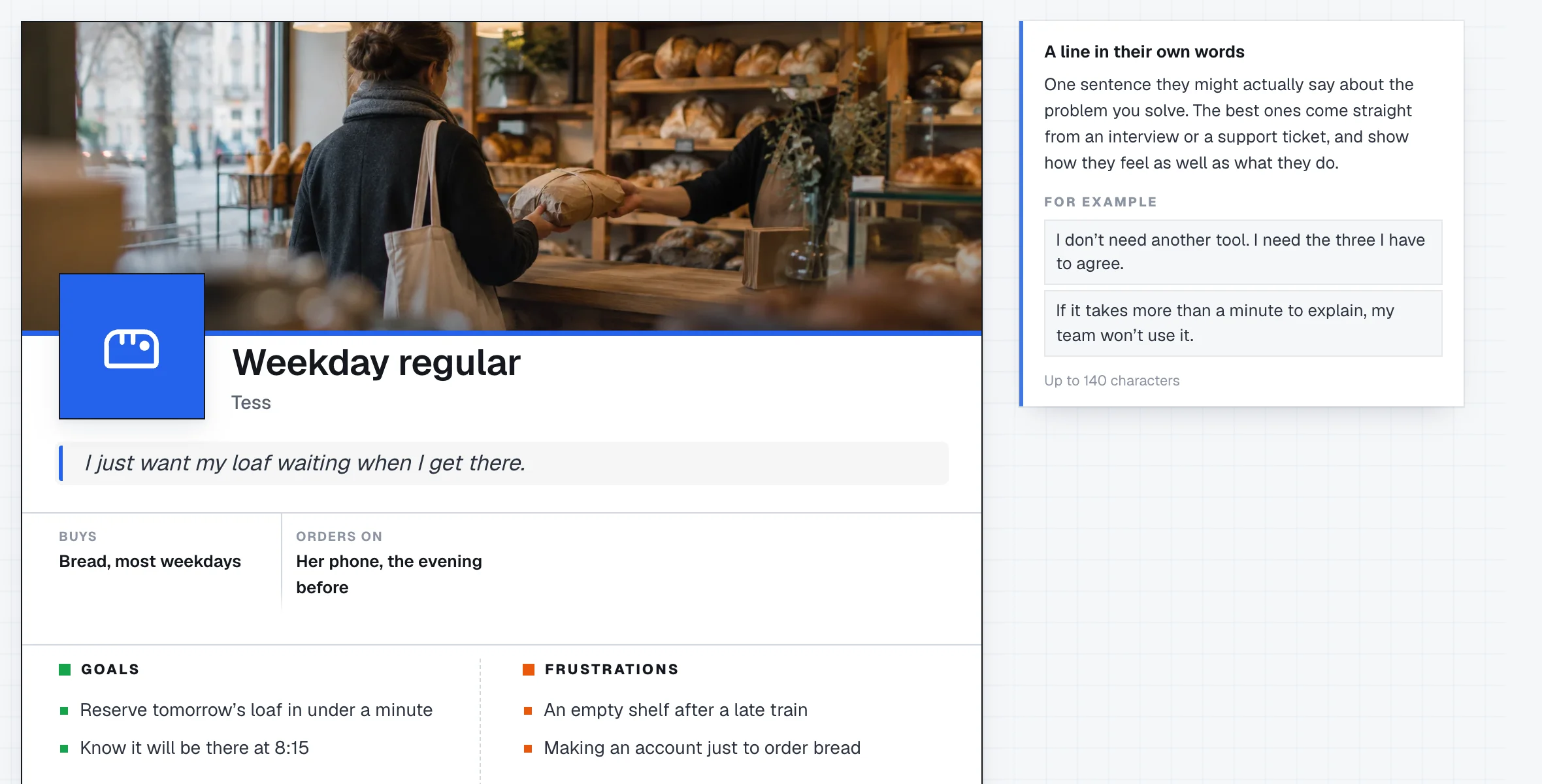
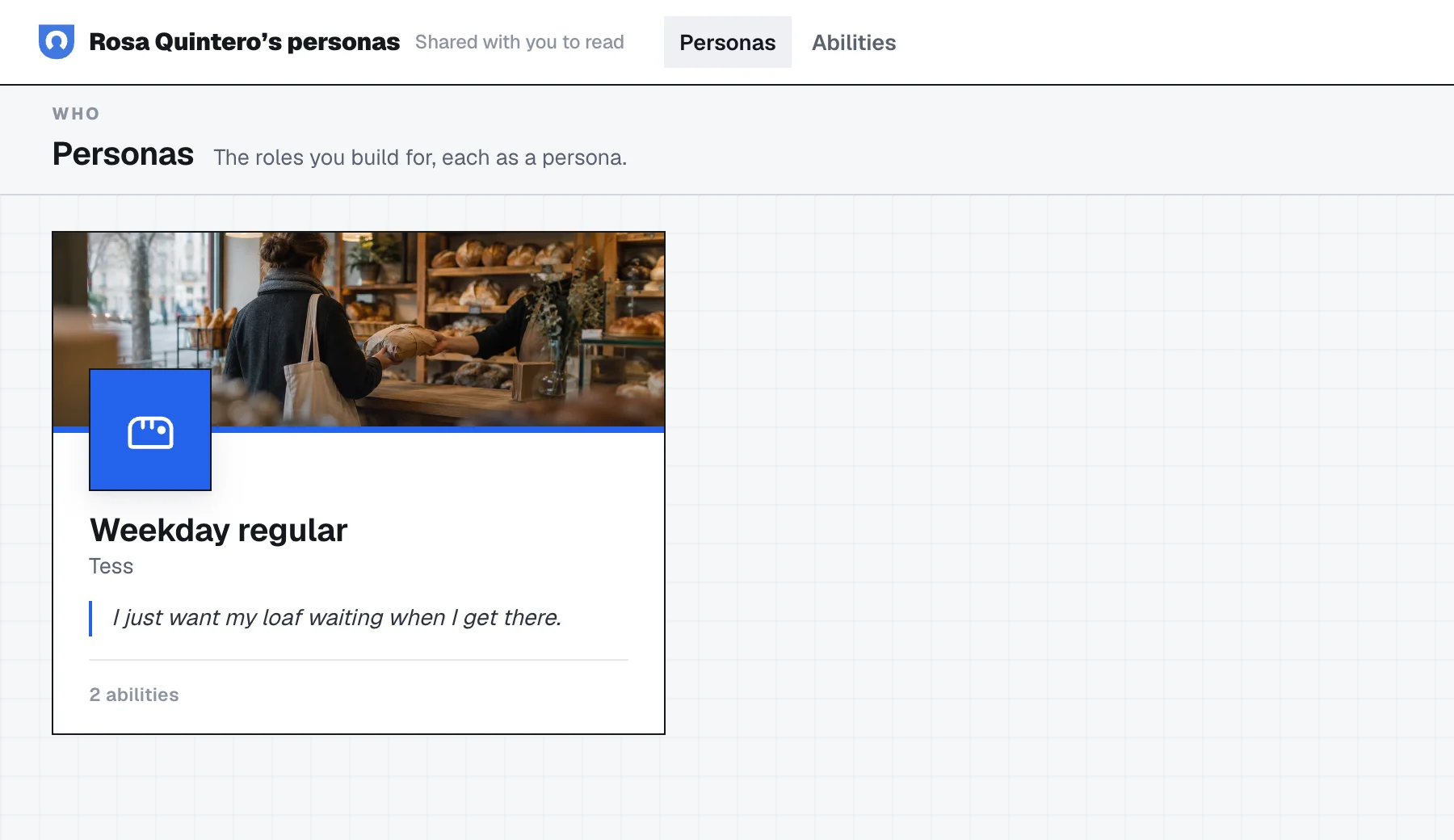
Does your customer look anything like Tess? Open her sheet and make her yours.Open it in the creator

More than 75,000 people have made personas here, at teams like these

  • Amazon
  • IBM
  • Citi
  • Ricoh
  • StubHub
  • Kayak

You’ve been in this meeting

Three customers, one product

Marketing writes to one, product builds for another

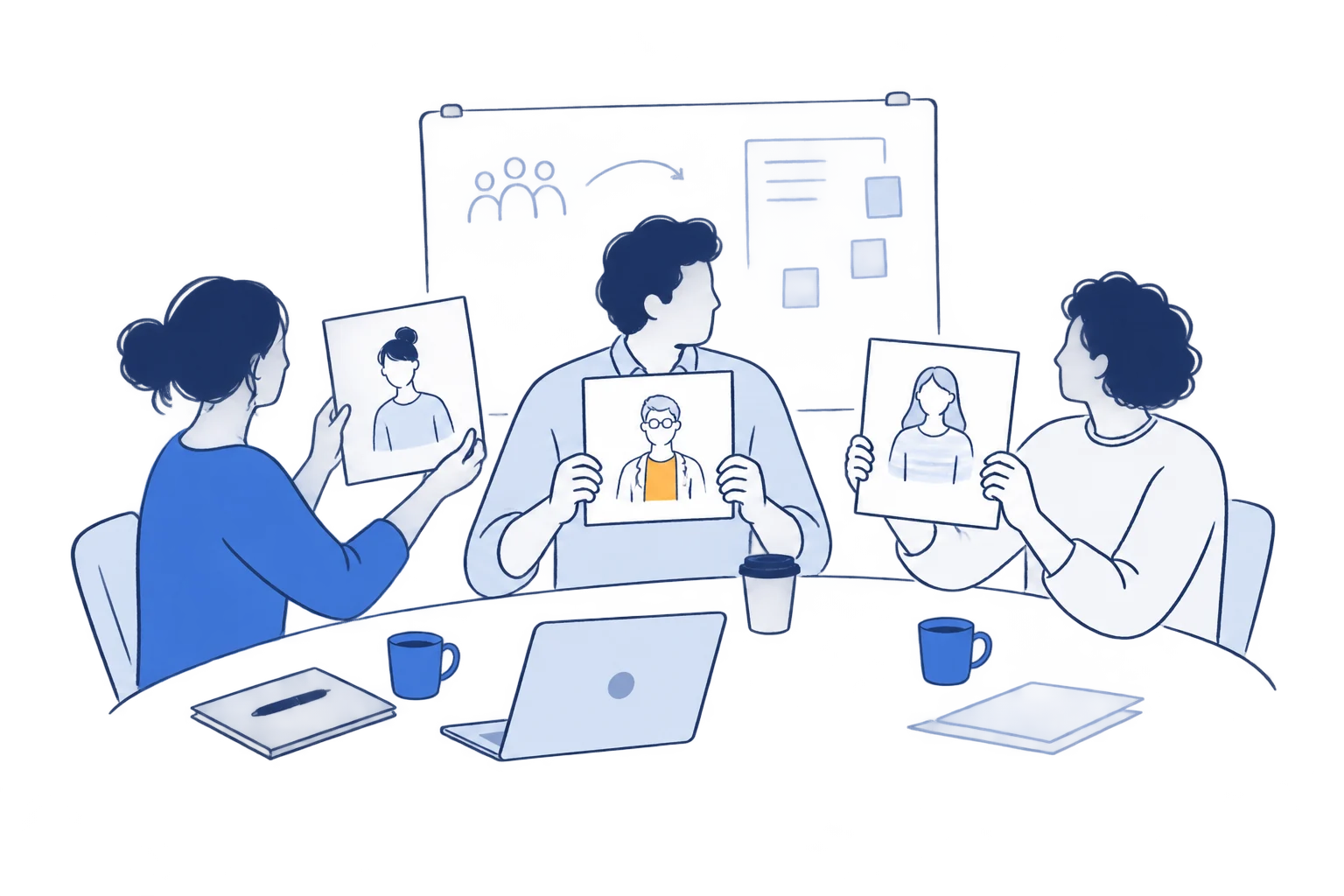
And whoever spoke last usually wins. Nobody’s wrong, exactly. Each of you is picturing the customers you happened to meet: the one who complained loudest, the one from last week’s sales call, the one who sounds a lot like you. Nobody has ever put the pictures side by side.

Three colleagues at a table, each holding up a different sketch of the same customer.

The last persona

An age, a stock photo and a slogan

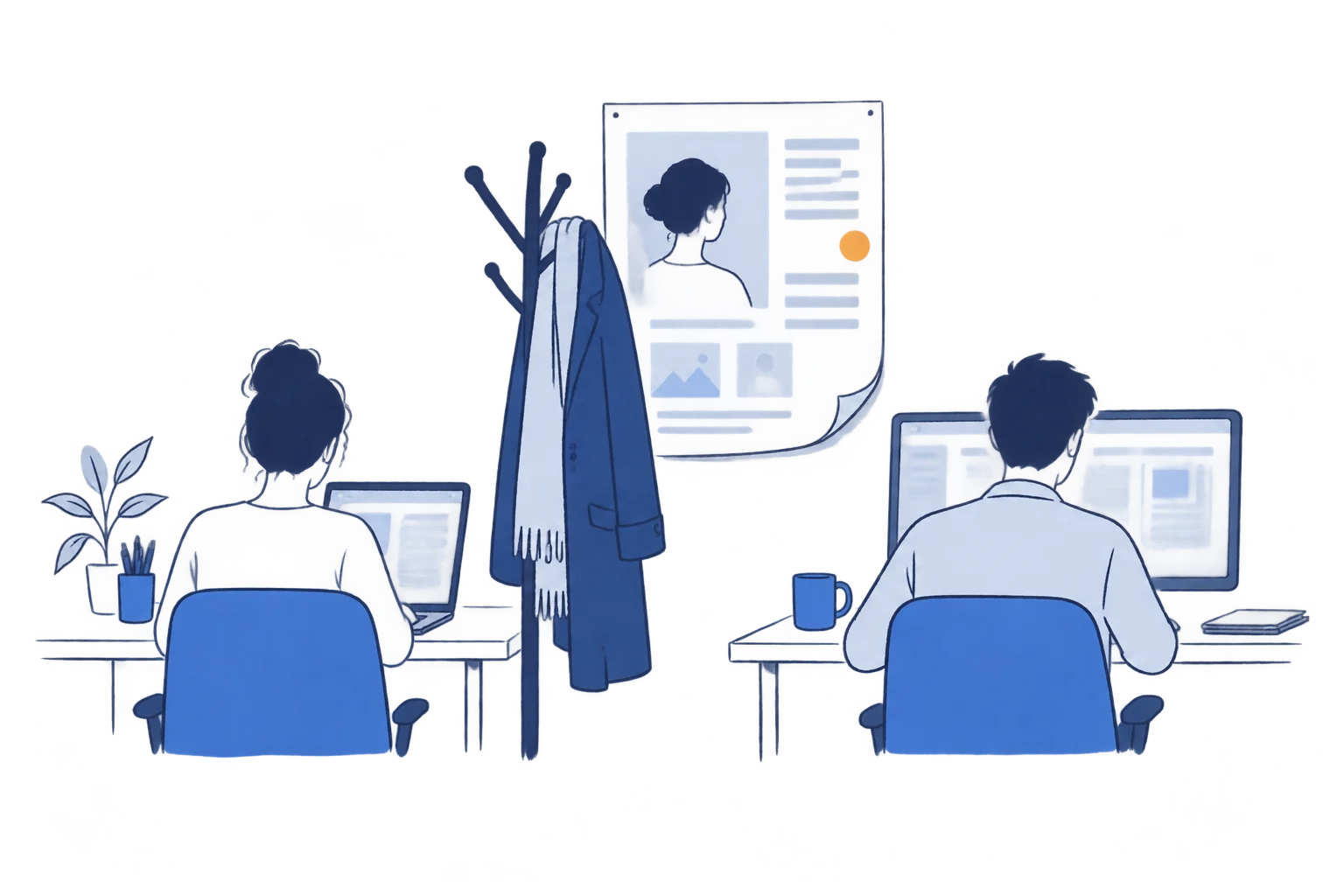
It came out of a workshop everyone enjoyed, went into a deck, and nobody opened it again. When the next argument came, the room argued from memory, just as it had before.

A printed persona poster curling at the corner on an office wall, half hidden behind a coat stand.

A persona rarely fails on the day it’s made

The workshop goes well. There are sticky notes, a name everyone likes, a photo that looks the part. Six weeks later someone says “our users want this”, and nobody reaches for the sheet.

Researchers who’ve sat with product teams keep finding that same ending. Personas get used almost exclusively for communication and not design1: to explain a decision to someone else, far more than to make one. A team can spend weeks building them and then barely mention them in the meetings where the choices get made2. Sometimes they’re brought out afterwards, to justify what was already decided3.

It isn’t hard to see why. About half of personas aren’t built mainly from research4, so the room half-knows it’s looking at a guess, and a guess loses to whoever argues hardest. The details meant to bring it to life work against it too: every age, hobby and dog you add narrows who it describes, until nobody can say whether it stands for a million customers or none5.

A quarter of personas are left for five years, or never touched again

Where would yours sit? A persona left alone for five years is describing a customer who has moved on. The teams revising every quarter also rated what their personas did for them highest, and by a margin that held up6.

  1. 28%Every quarter, or more often
  2. 46%Every one to four years
  3. 26%After five years, or never

As the source reports it.Worked out from the source’s figures.Drawn to show the pattern, not measured.Nielsen Norman Group, Are Your Personas Outdated?, 20166

A good one settles the argument

Picture the next planning meeting. Someone suggests asking customers to make an account before they order: it would help marketing. Someone else opens Tess’s sheet. Gives up when it asks for an account. Nobody has to win the argument. The room just finds out.

That’s what a persona in use looks like, and it has less to do with polish than with what’s written on it. It starts from the role and what it’s trying to get done, not a birthday. It says which lines you know and which you’re guessing, so the guesses become the questions for your next interview. And it says what someone in that role needs to be able to do, one sentence each with a check, so whoever builds it can tell when it’s done.

It changes what gets built, too. In one experiment, student developers who’d been handed personas gave noticeably less priority to features that would work against the users they’d read about7. The persona was in the room, so somebody spoke up for it.

Your first persona takes about five minutes

1. Personas

Write each role down

Start with the role, not a name: weekday regular, night-shift nurse, first-time buyer. Then what they’re trying to get done and what gets in their way. A guide beside every line says what belongs there, so you’re never staring at an empty box.

A persona’s sheet in the creator, with the guide open beside the line being written.

2. What they need

Say what each one needs to be able to do

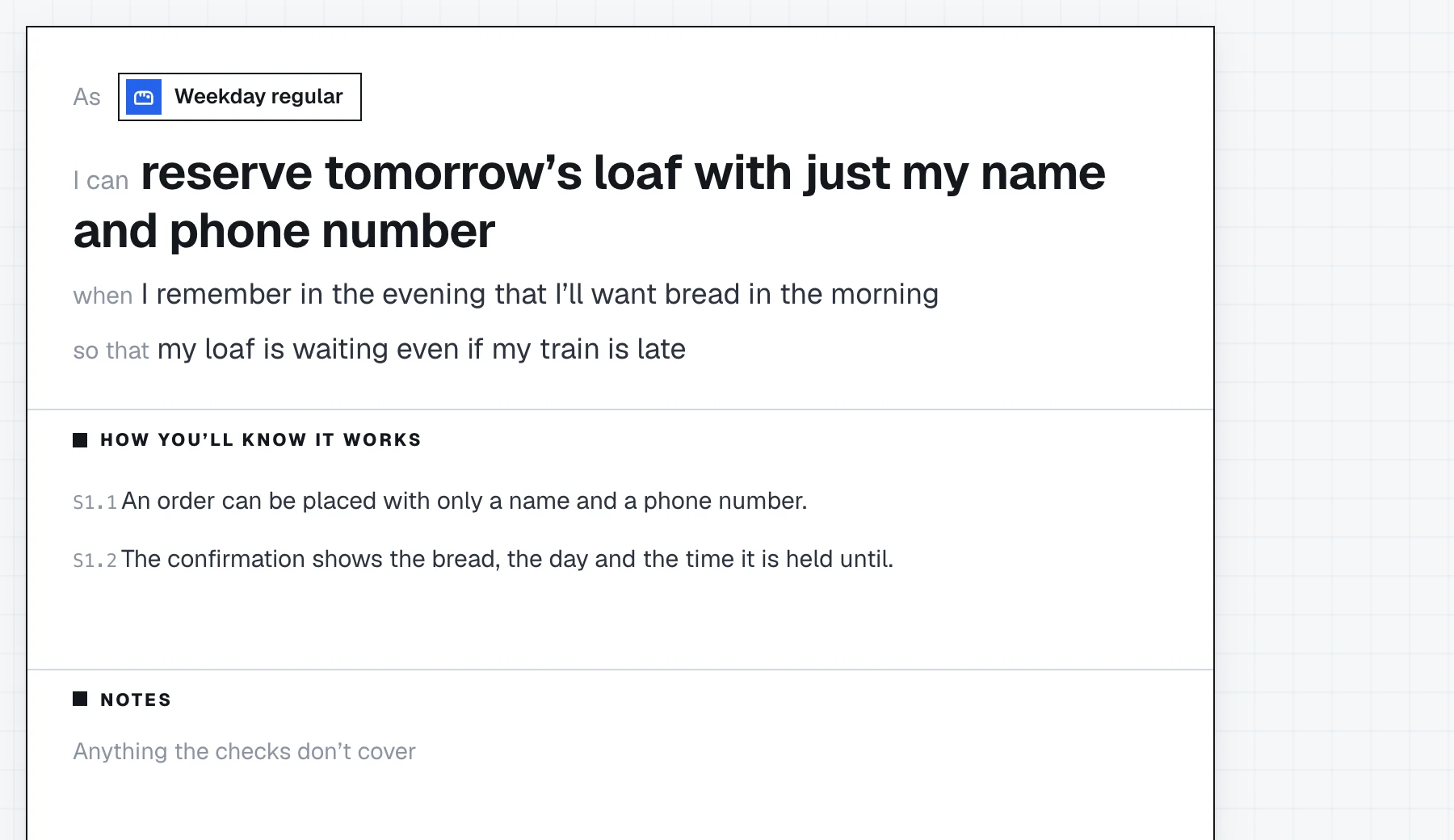
A plain sentence each, with how you’ll know it works. They’re user stories anyone on your team can check.

One thing a role needs to be able to do: the sentence, and the checks that say it works.

3. Your team

Put it in front of the people who build

Send one link and your team always sees the latest version. Print a sheet for the wall, or save it as a PDF.

A shared workspace as a teammate sees it: the personas, to read.

No research yet? Start from ours

Every line says where it came from, so you can check it against your own customers and keep what holds.

Learn the craft

Personas 101What a persona is, whether they work, and how to make one from research./personas/
Persona templateThe template, filled in, with what each part is for./user-persona-template/
User story templateAs a, I want to, so that, and the checks that make it testable./user-story-template/
GlossaryProto-persona, ICP, jobs to be done, in plain words./glossary/
ComparisonsPersona or empathy map, buyer or user persona: which you need./compare/
The state of personasHow teams really make personas, and which famous numbers hold up./research/state-of-personas/

The personas are agreed. Now the hard part.

Keeping everything you build tied to them. That used to happen slowly, in the conversations around a feature while it was being made. Now a coding agent can build in an afternoon what used to take a fortnight, and it’ll build the wrong thing just as fast as the right one.

When you’re ready to build from your personas, Pro gives your team the whole workbench, paid once for $379: your strategy, your website, every persona you need, and help writing all of it, for up to 5 of you. Whatever you wrote in the free creator is already there when you arrive.

If you want your personas inside your codebase, so your coding agents build for the roles you mapped and check their work against what each one needs, that’s Build. It’s work we do with your team, as Opable, and we price it for your team. Tell us what you’re making and we’ll show you how it would go. See what each includes, or how it works for teams.


Before you start

Is it really free?

Yes. Write your first persona now, with no account. Make a free account and you can keep up to 3, share them by one link and print them. There’s no trial that runs out.

Where is my work kept?

In your own browser as you type, until you choose to keep it with us. Then it comes across exactly as it is.

I don’t have any research yet. Can I still make one?

Yes. Write down what your team believes and mark it as a guess: that’s a proto-persona, and a list of what to go and check. Or start from one of our researched examples and change what doesn’t fit.

Does it write the persona for me?

Not on the free plan. You write each line with a guide beside it, and the persona is better for saying what you actually know. With Pro it drafts with you from your own notes and interviews, and you decide what stays.

Where this comes from

  1. 1How Do Designers and User Experience Professionals Actually Perceive and Use Personas?Tara Matthews (IBM Research - Almaden), Tejinder K. Judge (Google Inc.), Steve…↩︎
  2. 2Personas and decision making in the design process: an ethnographic case studyErin Friess (CHI 2012, ACM)↩︎
  3. 3An Empirical Study Demonstrating How Different Design Constraints, Project Organization and Contexts Limited the Utility of PersonasKari Rönkkö (HICSS 2005, IEEE)↩︎
  4. 4How Much Time Does It Take to Create Personas?Kim Flaherty, Nielsen Norman Group↩︎
  5. 5The Personas' New Clothes: Methodological and Practical Arguments against a Popular MethodChristopher N. Chapman, Russell P. Milham, Microsoft Corporation; Proceedings…↩︎
  6. 6Are Your Personas Outdated? Know When It's Right To ReviseKim Flaherty, Nielsen Norman Groupab
  7. 7User Personas Improve Social Sustainability by Encouraging Software Developers to Deprioritize Antisocial FeaturesBimpe Ayoola, Miikka Kuutila, Rina R. Wehbe, Paul Ralph; arXiv (accepted for…↩︎

    Start with the role you know best

    Write down what it needs, send the link round, and watch the next meeting go differently.

    Create a persona/persona-creator/See how it works for teams/for-teams/