A persona rarely fails on the day it’s made
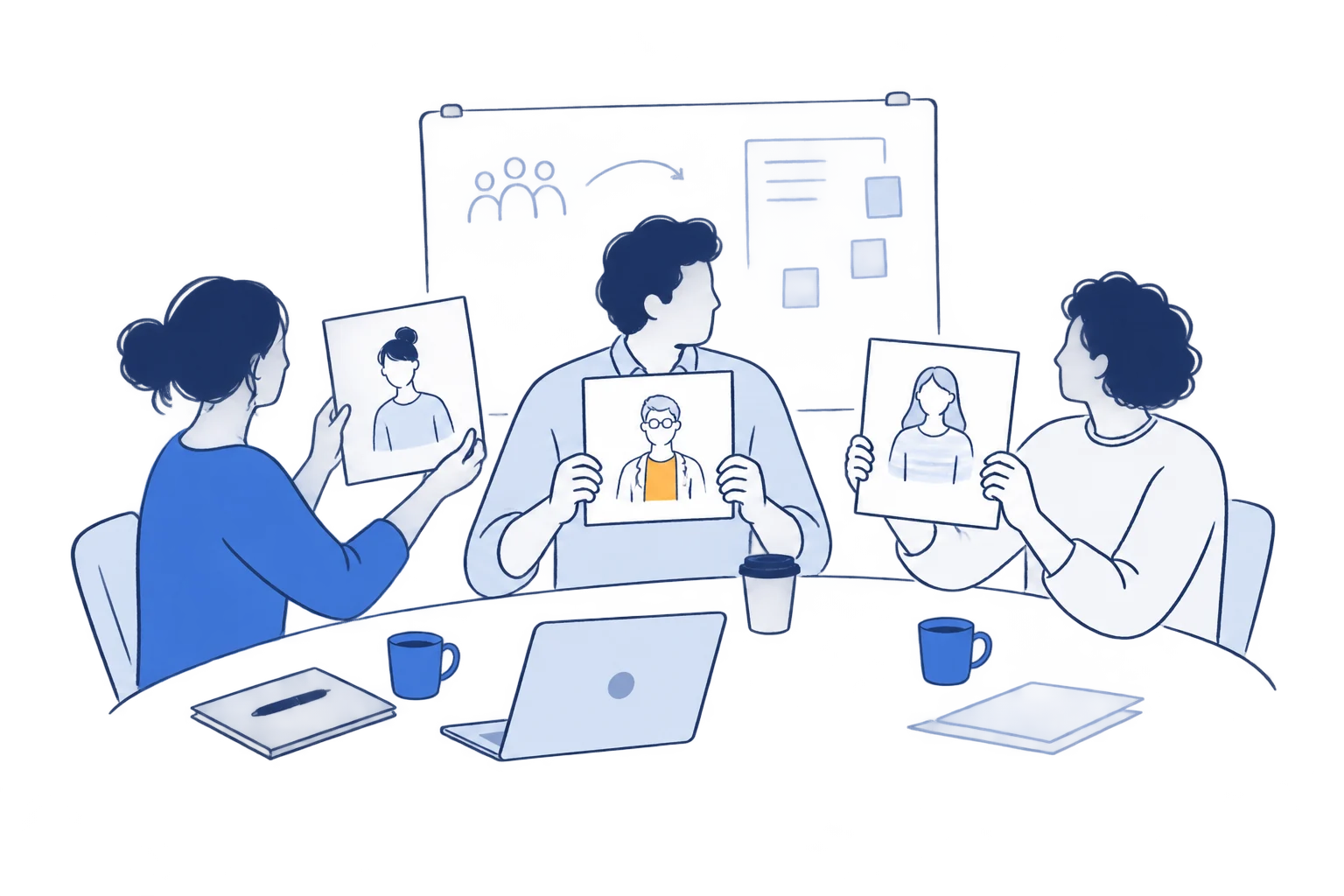
The workshop goes well. There are sticky notes, a name everyone likes, a photo that looks the part. Six weeks later someone says “our users want this”, and nobody reaches for the sheet.
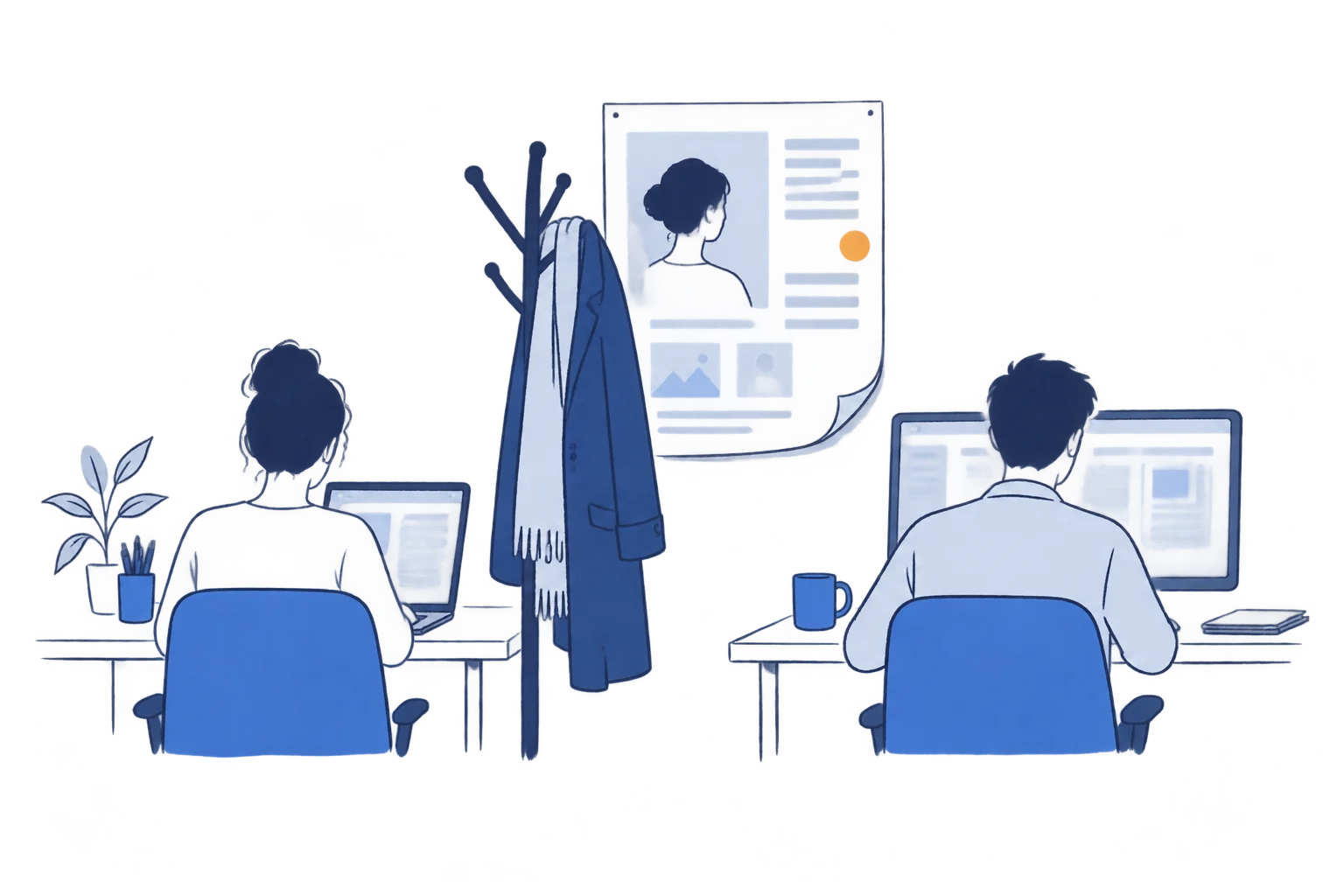
Researchers who’ve sat with product teams keep finding that same ending. Personas get used almost exclusively for communication and not design11 How Do Designers and User Experience Professionals Actually Perceive and Use Personas? doi.org: to explain a decision to someone else, far more than to make one. A team can spend weeks building them and then barely mention them in the meetings where the choices get made22 Personas and decision making in the design process: an ethnographic case study doi.org. Sometimes they’re brought out afterwards, to justify what was already decided33 An Empirical Study Demonstrating How Different Design Constraints, Project Organization and Contexts Limited the Utility of Personas doi.org.
It isn’t hard to see why. About half of personas aren’t built mainly from research44 How Much Time Does It Take to Create Personas? nngroup.com, so the room half-knows it’s looking at a guess, and a guess loses to whoever argues hardest. The details meant to bring it to life work against it too: every age, hobby and dog you add narrows who it describes, until nobody can say whether it stands for a million customers or none55 The Personas' New Clothes: Methodological and Practical Arguments against a Popular Method cnchapman.wordpress.com.
A good one settles the argument
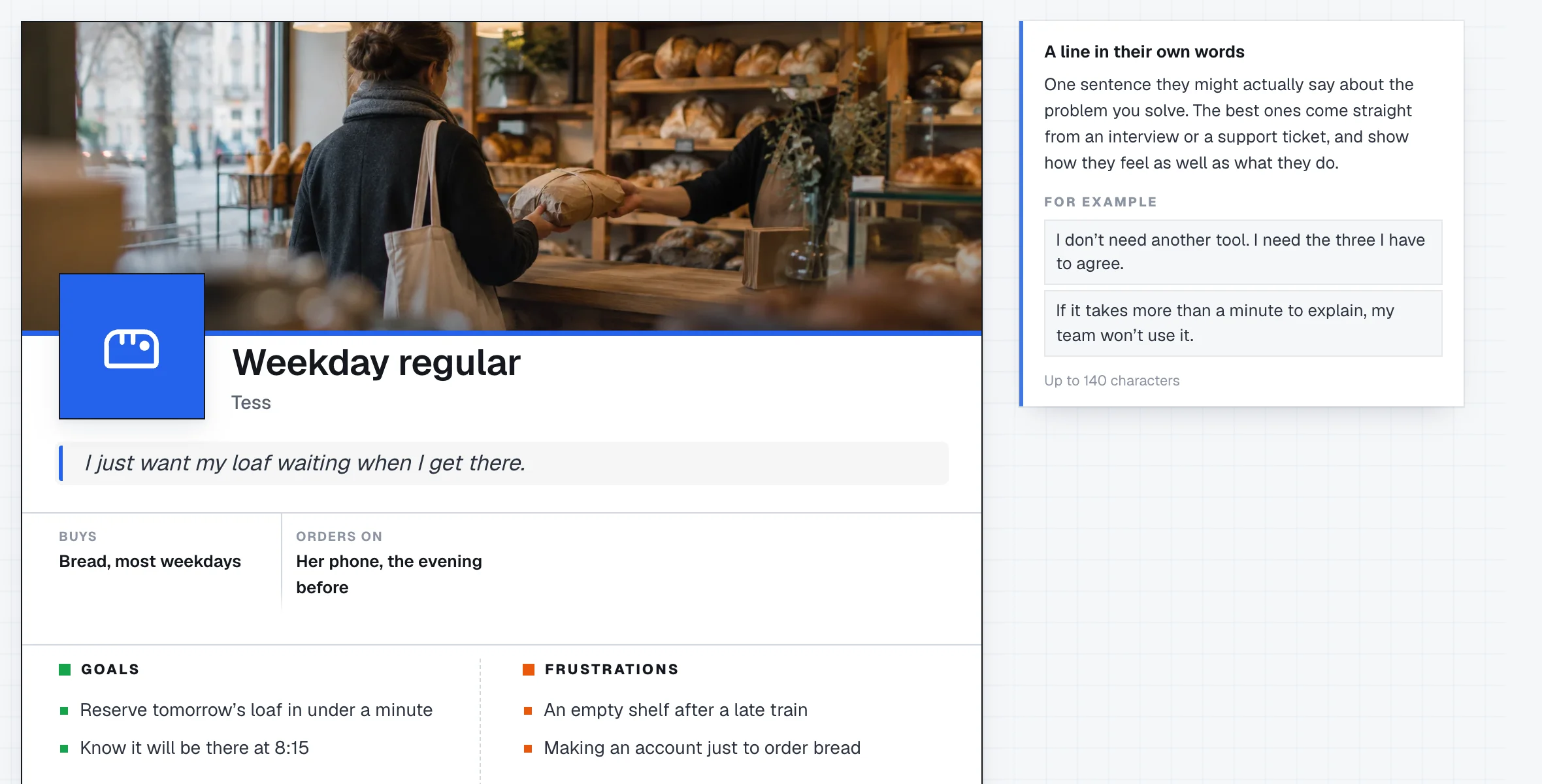
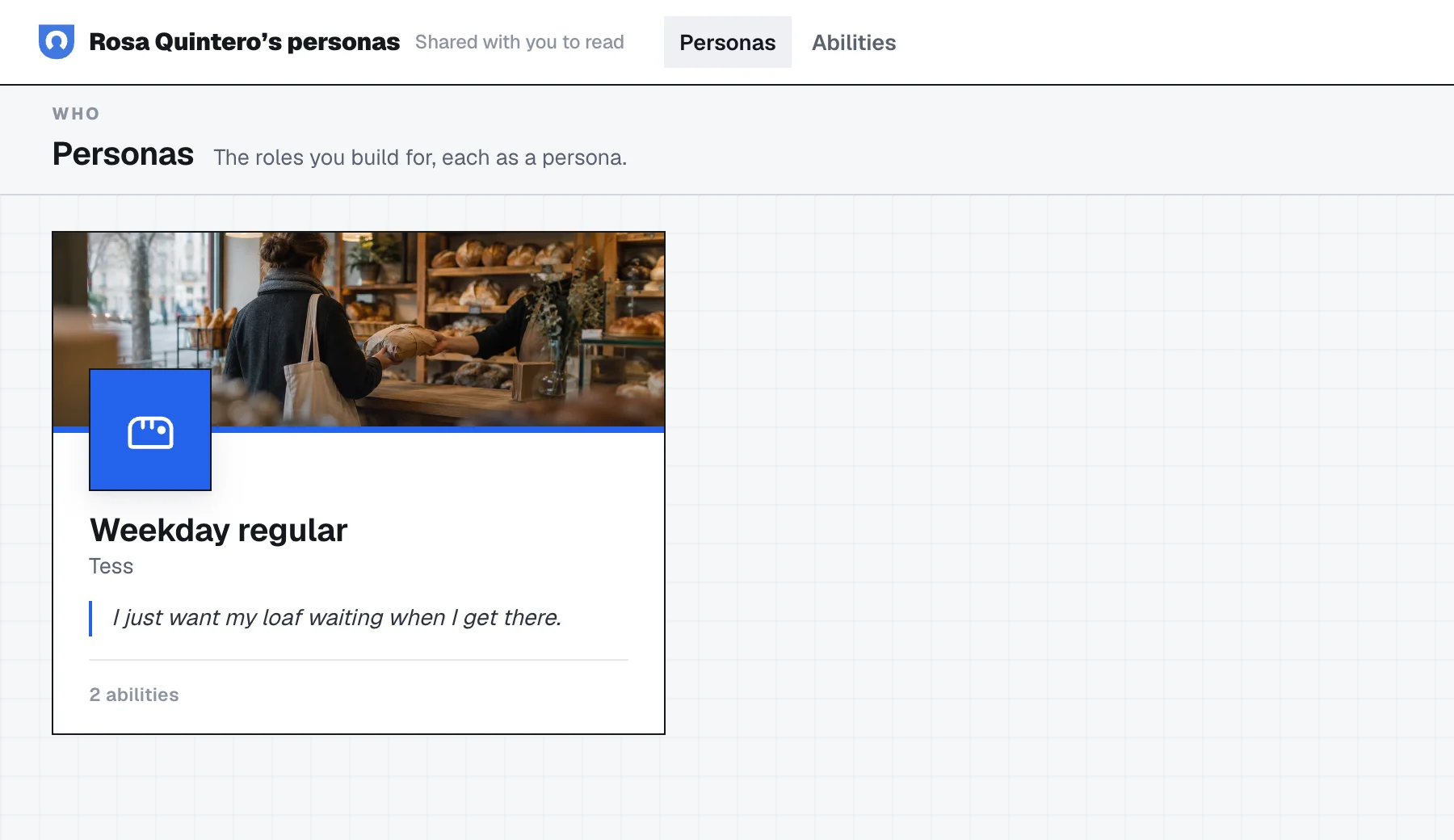
Picture the next planning meeting. Someone suggests asking customers to make an account before they order: it would help marketing. Someone else opens Tess’s sheet. Gives up when it asks for an account. Nobody has to win the argument. The room just finds out.
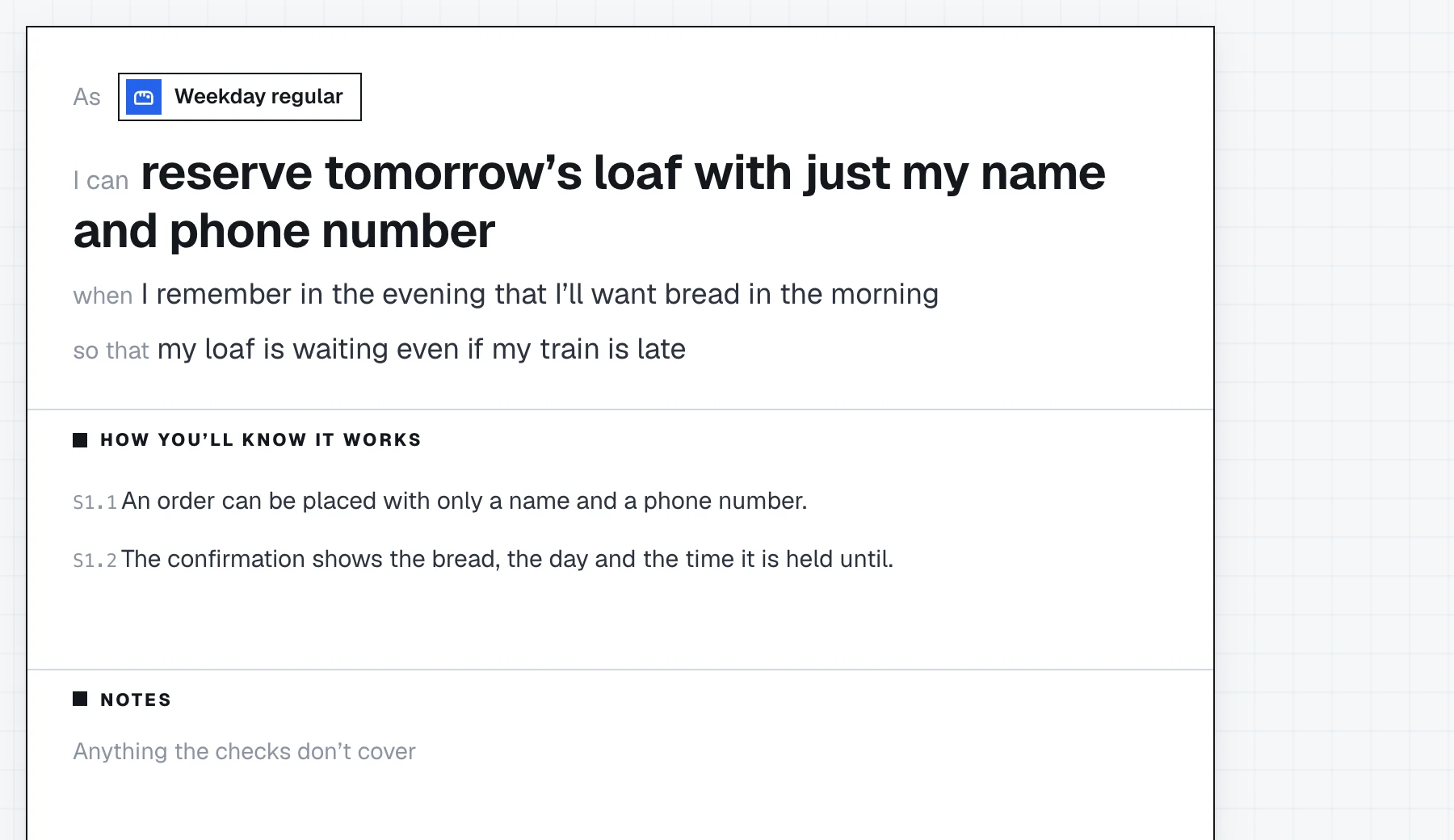
That’s what a persona in use looks like, and it has less to do with polish than with what’s written on it. It starts from the role and what it’s trying to get done, not a birthday. It says which lines you know and which you’re guessing, so the guesses become the questions for your next interview. And it says what someone in that role needs to be able to do, one sentence each with a check, so whoever builds it can tell when it’s done.
It changes what gets built, too. In one experiment, student developers who’d been handed personas gave noticeably less priority to features that would work against the users they’d read about77 User Personas Improve Social Sustainability by Encouraging Software Developers to Deprioritize Antisocial Features arxiv.org. The persona was in the room, so somebody spoke up for it.
The personas are agreed. Now the hard part.
Keeping everything you build tied to them. That used to happen slowly, in the conversations around a feature while it was being made. Now a coding agent can build in an afternoon what used to take a fortnight, and it’ll build the wrong thing just as fast as the right one.
When you’re ready to build from your personas, Pro gives your team the whole workbench, paid once for $379: your strategy, your website, every persona you need, and help writing all of it, for up to 5 of you. Whatever you wrote in the free creator is already there when you arrive.
If you want your personas inside your codebase, so your coding agents build for the roles you mapped and check their work against what each one needs, that’s Build. It’s work we do with your team, as Opable, and we price it for your team. Tell us what you’re making and we’ll show you how it would go. See what each includes, or how it works for teams.




 B2B marketing manager
 Full-stack developer
 Public school teacher
 Working undergraduate
 Regular individual donor
 First-time home buyer